
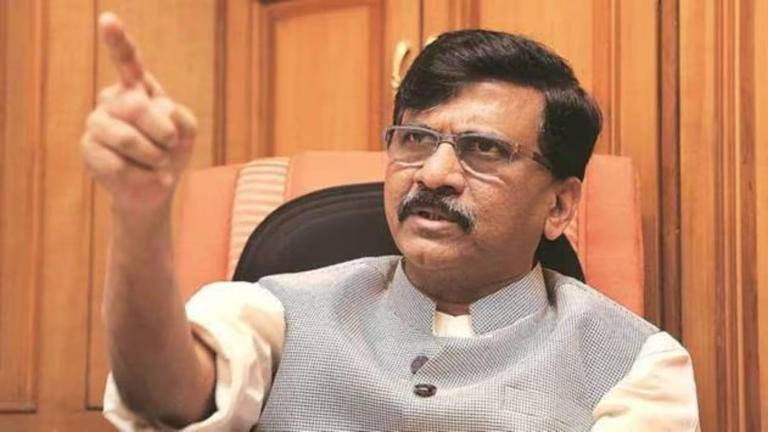
Amid ongoing national discourse around the imposition of Hindi, Maharashtra’s Shiv Sena (Uddhav Balasaheb Thackeray faction) has clarified its stance, distancing itself from the hardline position taken by Tamil Nadu Chief Minister and DMK leader MK Stalin. Shiv Sena (UBT) MP Sanjay Raut said on Sunday that while the party opposes the Centre’s push to make Hindi compulsory in primary education, it does not reject the Hindi language or those who speak it.
Speaking to reporters, Raut stated, “The Southern states have been fighting against Hindi imposition for years. Their stand is that they will not speak Hindi at all. But that is not our stand. In Maharashtra, we speak Hindi. We have Hindi cinema, music, theatre—it’s part of our culture. Our issue is only with the forceful imposition of Hindi in primary schools.”
This clarification came in response to a statement by MK Stalin, who praised the recent “victory rally” held in Mumbai by Shiv Sena (UBT) and Maharashtra Navnirman Sena (MNS) leaders, Uddhav Thackeray and Raj Thackeray, after two controversial Government Resolutions (GRs) mandating Hindi education in schools were withdrawn. Stalin had said the rally filled him with “immense excitement” and that the anti-Hindi struggle had now transcended state boundaries.
However, Shiv Sena (UBT) quickly clarified that Maharashtra’s protest is rooted in protecting linguistic choice, not rejecting Hindi entirely. “We haven’t stopped anyone from speaking Hindi. We’re only asking the Centre to respect linguistic diversity and not make Hindi a mandatory part of early education,” Raut said.
Maharashtra had recently witnessed a backlash after the state education department issued two GRs: one making Hindi compulsory for Classes 1 to 5, and another making it optional later. These decisions were widely criticized by regional parties, especially the Shiv Sena (UBT) and MNS, who accused the BJP-led Centre of trying to impose a single-language identity on a multi-lingual nation.
Addressing the Mumbai rally, Raj Thackeray accused the BJP of misusing the three-language formula, calling it a “political tool” rather than an educational reform. Echoing similar sentiments, Uddhav Thackeray condemned the move, asserting that regional languages must be prioritized, and education policy should not be used to further a nationalist language agenda.
Meanwhile, MK Stalin doubled down on his long-standing opposition to Hindi imposition and accused the BJP of withholding education funds from Tamil Nadu for not complying with central language policies. He referred to the Rs 2,152 crore under Samagra Shiksha Abhiyan allegedly being linked to accepting Hindi and Sanskrit.
Stalin also praised Raj Thackeray’s pointed questions to the Centre, including, “What is the third language taught in Uttar Pradesh and Rajasthan?” and accused the BJP of betraying linguistic and cultural pluralism.
While both states—Maharashtra and Tamil Nadu—stand united in resisting forced Hindi education, Shiv Sena (UBT) made it clear that their fight is not against Hindi speakers, but against any form of central authoritarianism in educational policymaking.